Start 2026 with clear vision! Book your eye test now and begin the year seeing your best.
Whether you’re thinking about contact lenses for the first time or want to update an existing prescription, E Eye Place provides thorough contact lens consultations at our Shelley and Port Coogee clinics.
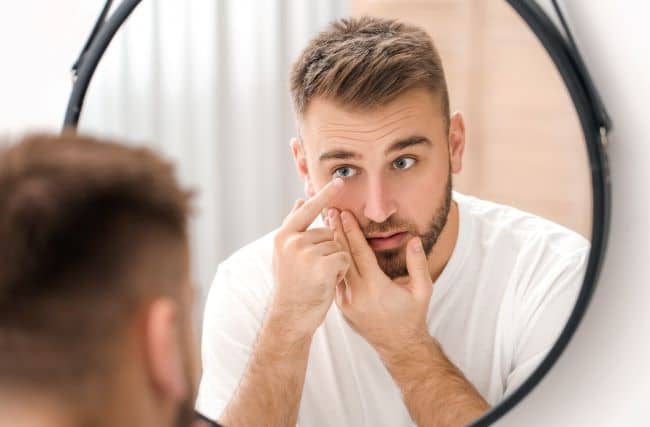
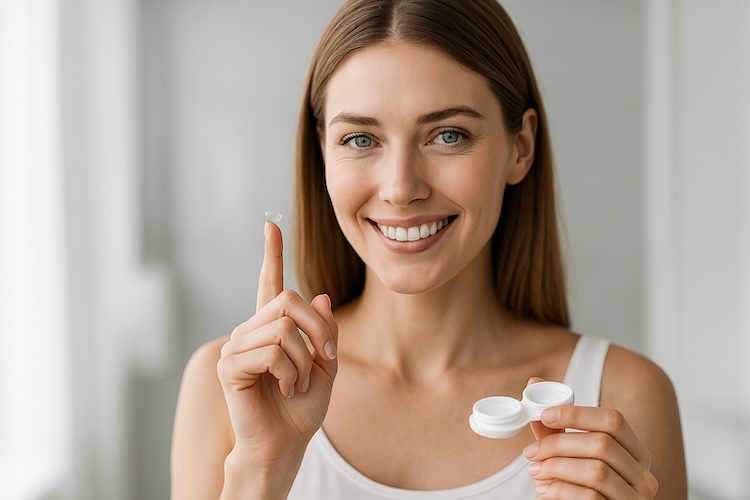
Our contact lens consultations go beyond a basic prescription check. During your appointment, our expert optometrists will assess your corneal curvature and eye surface health, evaluate your tear film to determine suitability for lens wear, discuss your lifestyle and wearing schedule, trial fit lenses and check for comfort and visual clarity, teach you how to safely insert, remove, and care for your lenses, and schedule a follow-up appointment to confirm the fit is working well. Most initial consultations take 45–60 minutes. We recommend booking a separate appointment for your contact lens fitting rather than combining it with a bulk-billed eye test, as the two require different assessments.
We provide a wide range of lens types for different vision conditions, including:
Daily disposable lenses – Convenient and low maintenance
Fortnightly and monthly lenses – Cost-effective options with proper care
Toric lenses – Designed for those with astigmatism
Multifocal lenses – Support both near and distance vision
Rigid Gas Permeable (RGP) lenses – Suitable for some complex prescriptions
If you’ve struggled with contact lenses before, our team will work with you to explore alternatives that may be more suitable.
As an independent optometry practice, E Eye Place is not tied to a single supplier. We fit lenses from leading brands including Acuvue, CooperVision, Alcon, and Bausch + Lomb, selecting the most appropriate product for your eyes rather than a preferred range. Our lens range includes daily disposables such as Acuvue Oasys 1-Day and Alcon Dailies Total 1, monthly and fortnightly lenses including CooperVision Biofinity, toric lenses for astigmatism, multifocal lenses for near and distance vision, Rigid Gas Permeable (RGP) lenses for complex or high prescriptions, and silicone hydrogel options for people prone to dry eyes.
We can provide you with either reusable or disposable contacts!
Reusable contact lenses require self care, including cleaning and storing in case after use, while disposable contact lens can be thrown out after use.
A contact lens consultation is separate from a Medicare-covered eye examination. Medicare does not cover contact lens fitting fees for routine prescriptions such as short-sightedness or long-sightedness. However, if you have a qualifying medical condition such as keratoconus or a significantly high refractive error, your fitting may be partially covered. Many private health funds contribute towards contact lens consultations and supply under Extras cover. We recommend checking with your health fund prior to your appointment — our front desk team can also help clarify what rebates may apply.


Contact lenses are often suitable for:
People with active lifestyles or sports routines
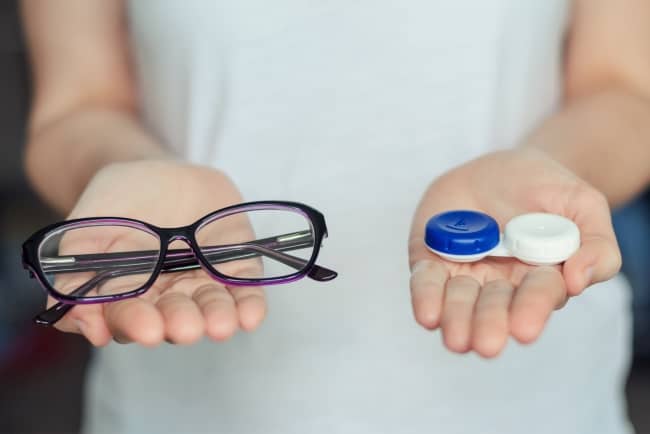
Individuals who experience discomfort with glasses
Those needing clearer peripheral vision
People with specific prescriptions who want more freedom in daily activities
Talk to us. We’re here to help you find the best contact lens solution.
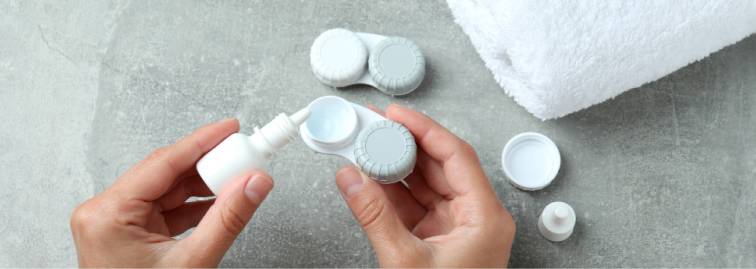
If you don’t have disposable contact lenses you must clean your reusable contact lens.
The process of cleaning your contact lenses is:
Cleaning your reusable contact lenses will reduce the risk of damaging your eyes through harmful infection.
Contacts can be worn by people who are nearsighted, as well as those who are farsighted. E Eye Place can provide you with some to correct your vision, whether you have myopia or hyperopia.
If you have presbyopia, which restricts your eyes’ ability to focus on close objects, contacts are a great option to see better. Astigmatism can also be corrected by specific contacts.
They can also help correct several vision disorders. However, they do not possess the ability to correct misalignment of one eye or associated heterophoria. Talk to your eye doctor to assess your vision and determine the best lenses for you.
A contact lens prescription is typically valid for 12 months. We recommend an annual check to confirm your prescription is still accurate and that your eyes remain healthy with continued lens wear.
es. There is no strict minimum age for contact lens wear suitability depends on maturity and the ability to handle and care for lenses responsibly. Many teenagers wear contact lenses successfully, particularly for sport. Our team will assess suitability and provide thorough instruction for first-time wearers.
No. A standard eye test checks your vision prescription and overall eye health, while a contact lens consultation specifically assesses your suitability for lens wear. This includes measuring the curvature of your cornea, evaluating your tear film, and trialling an appropriate lens. If you haven’t had an eye test recently, we recommend scheduling both in the same visit.
In many cases, yes. We stock a range of trial lenses and can often provide a same-day trial pair so you can test comfort before committing to a supply. This depends on your prescription and the lens type required.
They can be either soft or hard. Soft contacts are those that need frequent replacement, such as daily, biweekly, and monthly. There are also soft variations called extended wear, which allow the user to wear them for up to 30 days without removal. Soft contacts can also be customised for a yearly replacement, commonly designed for people with high or complex prescriptions.
Meanwhile, hard contacts can also come in different types. The most popular are rigid eye permeable and minisclerals. They are suitable for those with high prescriptions, including those with astigmatism and myopia. Hard contacts are measured and fitted to the eyes of the wearer. They can be used for up to 18 months.
Cleanliness is the top priority. Dirty hands mean dirty lenses, which cause irritation or, worse, injury to the eyes. Always wash your hands with soap and water. Before picking up your contacts and inserting them on your eyes, dry your hands thoroughly.
Don’t be tempted to use tap water. Instead, use a saline solution for rinsing your contacts. A cleaning solution is used to clean the lenses and the case where you store them. Your contacts case should be replaced once a month.
Make sure you visit your eye doctor for routine check-ups, which help discern when you need a replacement or a prescription change.

Most appointments take 30–45 minutes, depending on whether this is your first time or a follow-up.
Some lenses are better suited for dry eyes than others. We’ll assess your tear quality and recommend the best options.
Yes. We have lenses designed for astigmatism and multifocal lenses for reading and distance correction.
Looking for ‘optometrist near me?’