Reusable contact lenses can be a safe, comfortable, and convenient alternative to glasses — but only when they are handled correctly. Good hygiene, the right cleaning routine, and knowing how to insert and remove lenses properly all play a role in protecting your eye health. Mistakes like sleeping in unapproved lenses, rinsing them in tap water, or topping up old solution significantly raise the risk of irritation and serious eye infections.
This guide covers everything you need to know about using reusable contact lenses day to day. If you are new to contact lenses or looking to update your fitting and care routine, a contact lens consultation at E Eye Place is the best place to start.
Quick Summary
Always wash and dry your hands before touching your lenses.
If a soft lens forms a smooth bowl with edges pointing upward, it is the right way around. If the edges flare out like a plate, it is likely inside out.
Never rinse or store reusable contact lenses in tap water. Use the solution recommended by your optometrist.
Rub, rinse, disinfect, and store lenses exactly as directed for your lens type and solution.
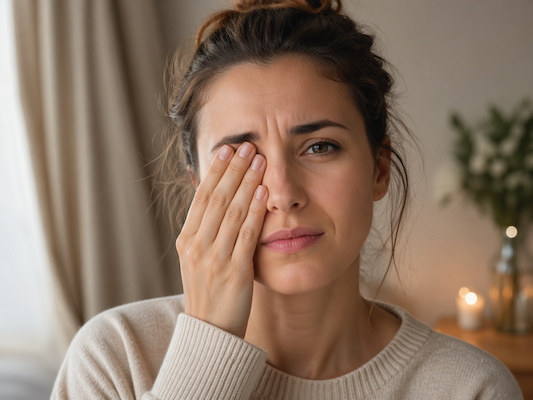
Remove your lenses immediately if your eyes become red, painful, watery, or sensitive to light, and arrange an eye check.
Before You Touch Your Reusable Contact Lenses
Always start with clean hands. Wash them thoroughly with soap, rinse well, and dry them with a clean, lint-free towel before inserting or removing your lenses. Wet or dirty hands can transfer germs, lint, and residue onto a lens, which can then irritate the eye or raise the risk of infection. Keeping your fingernails short and smooth also reduces the chance of accidentally scratching the lens or your eye.
It also helps to work over a clean, flat surface. Many people discover too late how easy it is to drop a lens into a sink. A simple habit like always starting with the same eye can help prevent you from mixing up your left and right lenses.
How to Put Reusable Contact Lenses In
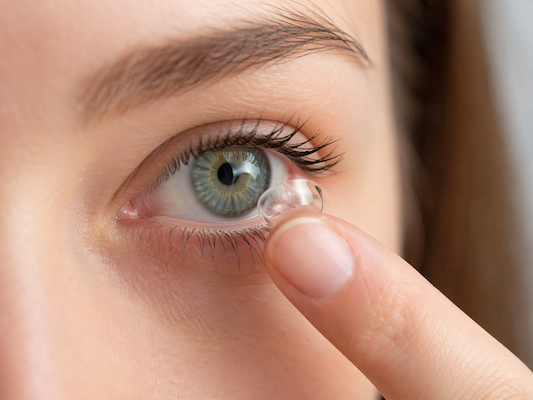
Place the lens on the tip of your index finger and check that it is clean, moist, and undamaged. Use one hand to hold your upper lid open so you do not blink over the lens. With the middle finger of the hand holding the lens, gently pull your lower lid down. Then look straight ahead or slightly upward and place the lens gently onto the eye. Slowly release your lids and blink a few times until the lens settles into position.
If something feels off, do not push through the discomfort. Remove the lens, inspect it, rinse it with the correct contact lens solution if appropriate for your lens type, and try again. A lens that feels scratchy, shifts around excessively, or will not settle properly may be inside out, damaged, or dirty.
A helpful way to think about it: inserting a lens correctly should feel a little like placing a drop of water on the eye — not like having a piece of grit stuck in it.
How to Remove Reusable Contact Lenses
Wash and dry your hands first. Look upward, gently pull your lower lid down, and slide the lens down onto the white part of the eye using your index finger. Then softly pinch the lens between your thumb and index finger and remove it. Never use your nails.
Once the lens is out, what you do next depends on your lens type. If it is a reusable soft lens, it should be cleaned and disinfected before being stored in a clean case with fresh solution. If it is a daily disposable lens, discard it after removal — it should never be stored and reused.
If you find removal difficult, stay calm and blink a few times. A dry lens can adhere more than usual, and the answer is never to tug harder. Follow the advice given at your contact lens fitting and use lubricating drops if your optometrist has recommended them.
How to Tell If a Contact Lens Is Inside Out
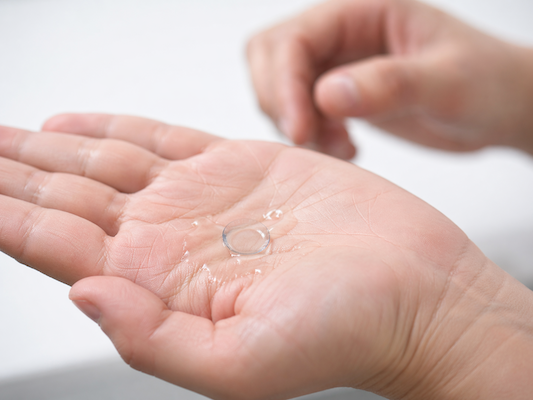
For soft reusable contact lenses, the easiest check is the bowl test. Balance the lens on your fingertip and view it from the side. If it forms a smooth, round bowl with the edges pointing straight upward, it is the right way around. If the edges flare outward like a shallow plate or saucer, it is likely inside out.
Comfort is another clue. An inside out lens often feels irritating, moves around more than it should, or never seems to sit right in the eye. It may still go in, but it usually will not feel correct.
A simple way to picture it: a correctly oriented lens looks like a taco shell shape — curved up and inward. An inside out lens looks more like a shallow soup bowl with floppy edges.
How to Clean Reusable Contact Lenses
Reusable contact lenses should be cleaned exactly as directed by your optometrist and the solution manufacturer. Cleaning removes surface deposits and debris, while disinfection eliminates harmful microorganisms. Both steps are essential.
For many soft reusable lenses, the standard process is:
Place the lens in the palm of your clean hand.
Apply the recommended contact lens solution.
Gently rub the lens for the time advised.
Rinse the lens with more solution.
Place it in a clean lens case filled with fresh solution.
Never top up yesterday’s solution. Empty the case completely, use fresh solution each time, and replace the lens case regularly. Tap water should be avoided at every stage — including when rinsing the case — as it can introduce harmful microorganisms linked to severe eye infections.
In Australia, multipurpose solutions are commonly prescribed for reusable lenses, while hydrogen peroxide systems are also used in certain situations. The right option for you depends on your eyes, your lens type, and your optometrist’s recommendation.
What Not to Do With Reusable Contact Lenses
Never:
Sleep in lenses unless they were specifically prescribed and approved for overnight wear.
Rinse, clean, or store lenses in tap water.
Wear lenses in the shower, pool, or ocean if you can avoid it.
Reuse old solution or top it up.
Continue wearing a lens that feels painful, damaged, or unusually uncomfortable.
Signs Something Is Wrong
Remove your lenses and seek advice promptly if you notice redness, pain, watering, light sensitivity, blurred vision, discharge, or a lens that suddenly becomes very uncomfortable.
Contact lens-related eye infections can escalate quickly. The safest approach is always to stop lens wear immediately and get your eyes examined rather than hoping the problem resolves on its own. You can book an appointment at E Eye Place if you have any concerns.
When to Book a Contact Lens Check
Even if your lenses feel comfortable, regular reviews help ensure that your prescription, lens fit, eye surface health, and wearing habits are all still appropriate. It is worth coming in if you are new to reusable contact lenses, finding insertion or removal difficult, experiencing discomfort or dryness by the end of the day, or overdue for a general eye test.
Your lens wear should always follow the personalised fitting and care instructions provided at your consultation — not generic advice from a packet or the internet. If anything has changed with your eyes, vision, or comfort, it is worth a review.
Need help with reusable contact lenses? We can show you how to insert and remove them safely, check the fit, and make sure you are using the right cleaning routine for your eyes and lens type. Book a contact lens consultation with the team at E Eye Place.
Stephanie is an owner optometrist, researcher and educator. She has held clinical, teaching and research roles in Australia and overseas, and has extensive training and clinical experience. Stephanie is also the head optometrist at E Eye Place, on top of this, she is also currently a PhD candidate at UNSW. Dr Stephanie Yeo Optometrist BOptom (HC1) GradCertOcTher DOPT (Merit) CO Ophthalmic Medicines Prescriber.